19 March 2026
Fire Curtain Applications in Atrium Buildings
Atria create smoke control challenges that conventional compartmentation cannot solve. Here's how fire curtains, BS 9999 guidance and gravity fail-safe deployment work together.
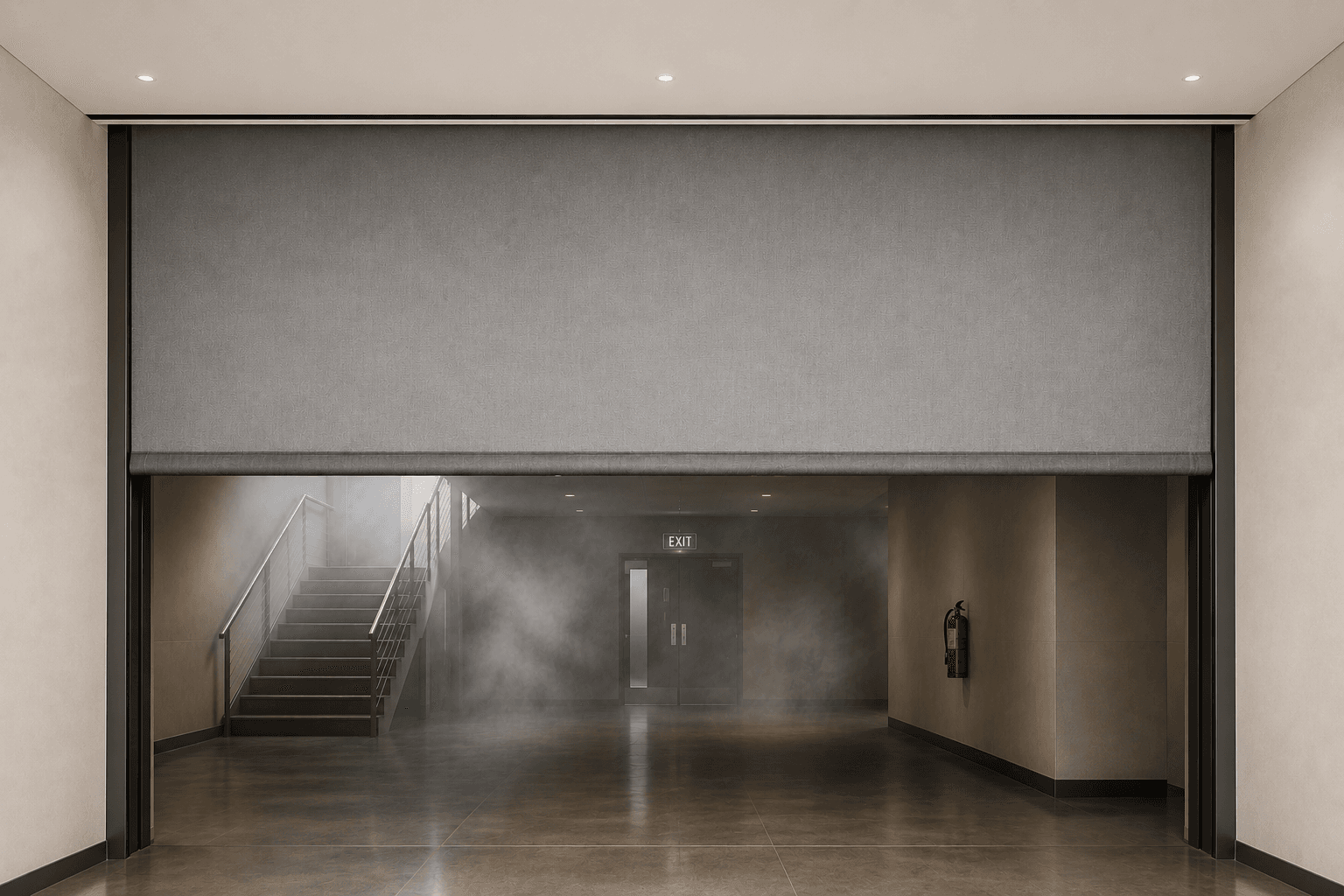
An atrium is, by design, a large connected volume that breaks the floor-by-floor compartmentation that the rest of a building relies on. Smoke generated on any level can rise freely through the atrium and spread laterally into upper floors that are otherwise unaffected by the fire. Fire curtains are one of the primary tools used to reintroduce compartmentation into these spaces - without permanently closing off the open volume that makes an atrium architecturally valuable.
Smoke Control Zones in Large Volumes
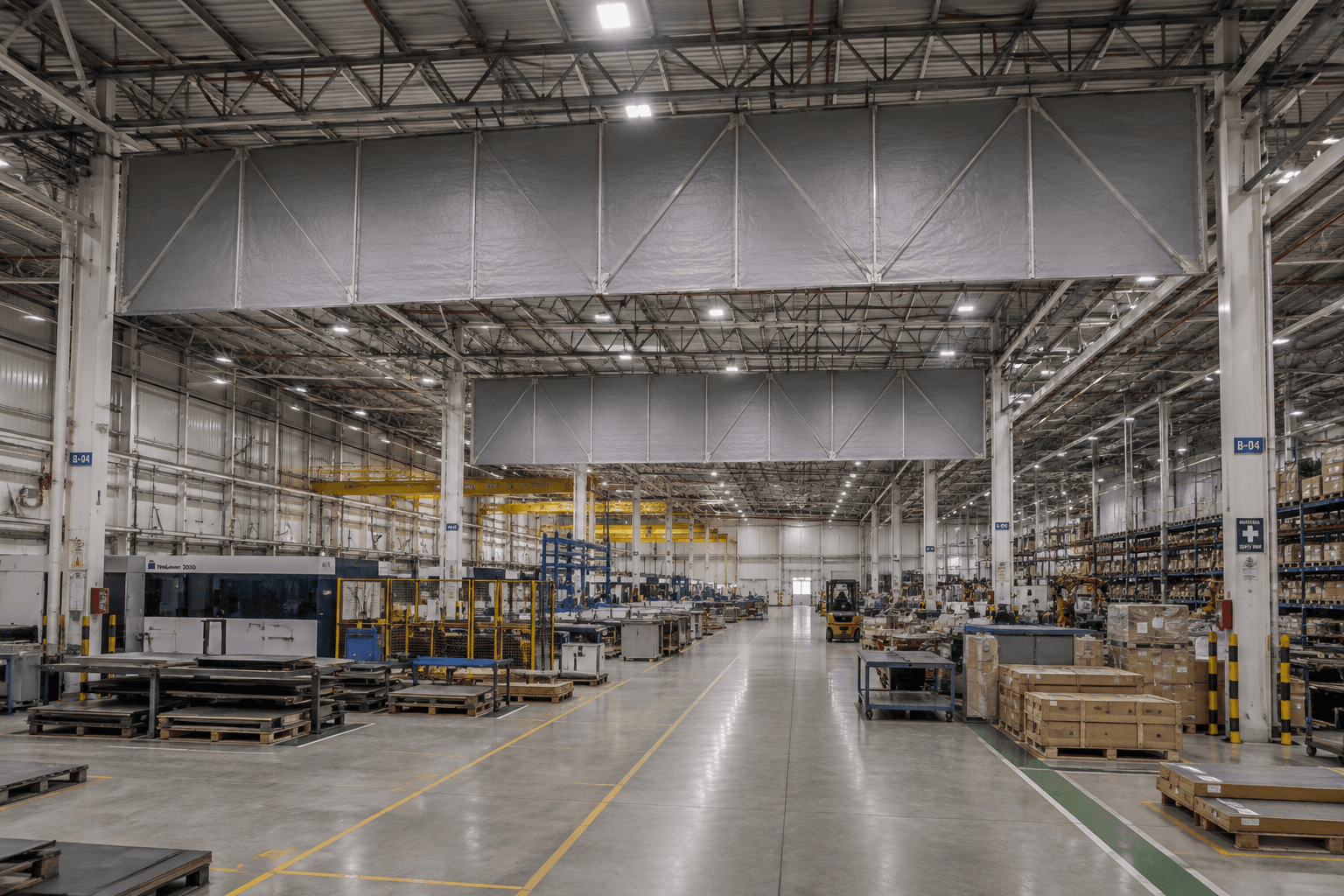
In an atrium fire strategy, the volume is typically divided into smoke control zones - at the boundary between the atrium and adjoining floor plates, or across the atrium itself at defined heights or spans. Fire and smoke curtains deployed at these boundaries contain smoke within a defined zone, buying time for occupants on unaffected floors to evacuate via protected routes, and directing smoke towards dedicated extraction points rather than allowing it to spread uncontrolled through the connected volume.
BS 9999 Guidance for Assembly and Atrium Spaces
BS 9999 provides guidance on smoke control strategy for atria and large-volume assembly spaces, including the use of fire and smoke curtains tested to EN 1634-1 and EN 12101-1 to form compartment and reservoir boundaries. Where an atrium connects to assembly occupancies such as auditoriums, exhibition halls or shopping malls, extended radiation control performance is often specified to reflect the larger volumes and longer evacuation timelines typically associated with these spaces.
Why Gravity Fail-Safe Deployment Matters in Atriums
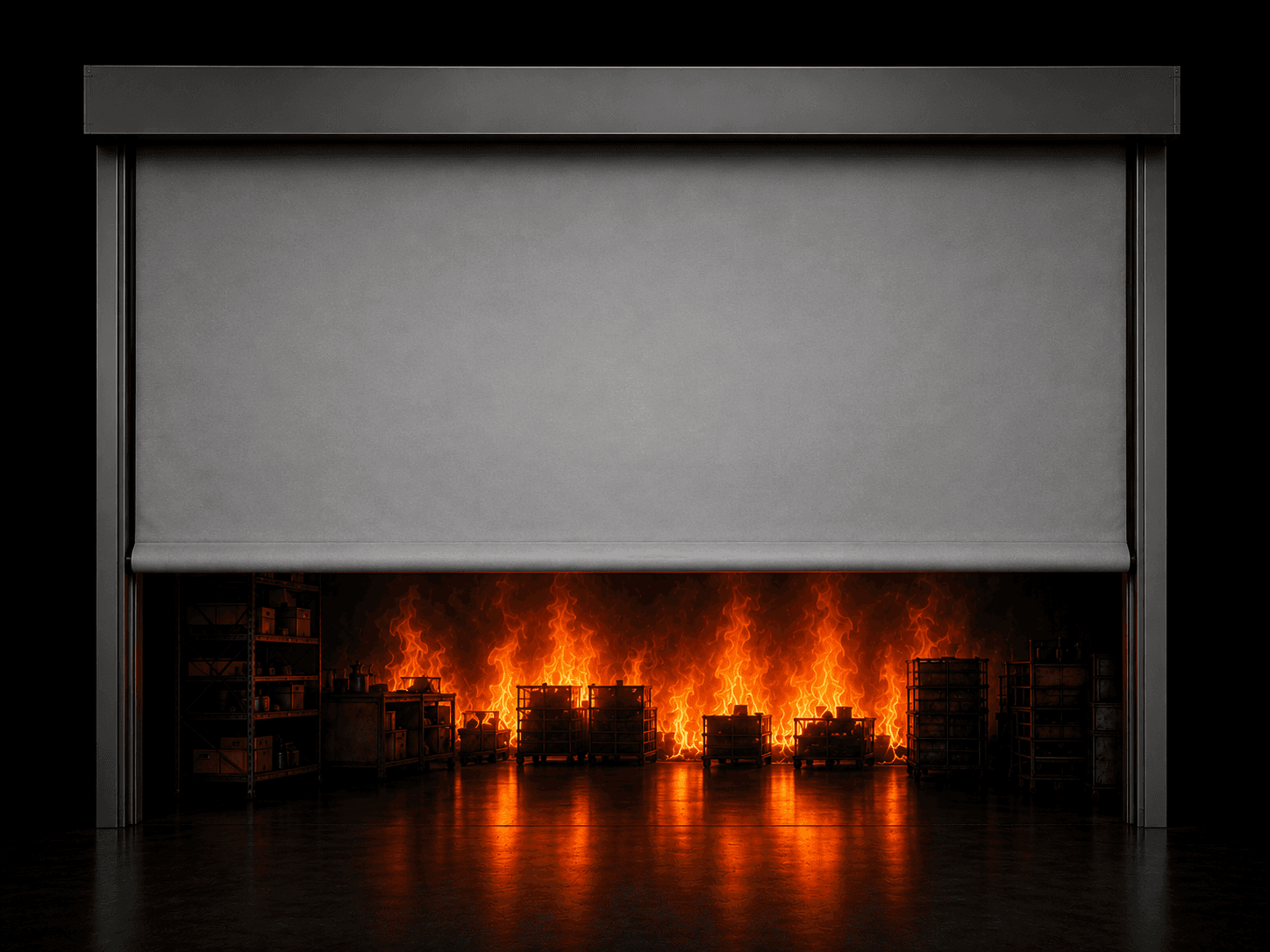
Atrium fire curtains are often among the largest single curtain installations in a building - spanning wide openings at significant drop heights. If such a curtain relied on a powered descent mechanism or battery backup that could fail, the consequences of non-deployment in a large atrium are severe, given the volume of smoke that could spread unchecked. BÖLDT's automatic fire curtains use a gravity fail-safe mechanism: the curtain is held in its retracted position by an electric motor, and on loss of power - whether from a controlled fire alarm signal or total power failure - the curtain descends under gravity at a controlled rate. No battery backup or manual release is required, which removes an entire category of failure mode from the most safety-critical curtains in the building.
Engineering for Scale
Large atrium curtains place specific demands on manufacturing. A curtain spanning 20 metres or more must hold its form and descend evenly across its full width - any sagging, twisting or uneven descent compromises the seal at the guide rails. This is the reason BÖLDT invested in a made-to-order automatic sewing machine, imported from Italy, capable of stitching a dual seam with stainless steel thread up to 25 metres in a single run - widely regarded as the world's longest machine of its kind. For atrium projects, BÖLDT's larger automatic fire curtain models are engineered specifically for this scale, tested to EN 1634-1 and certified to E 240 / EW 60.